ServicesWell Water Treatment
Well Water Treatment in Jacinto City
With a private well, nobody else is checking your water for you. We sample it, explain the numbers in everyday terms and fit treatment to the problems we actually find. You'll know our arrival window ahead of time, and we'll phone you if the plan shifts.
Treatment That Starts With Your Well's Own Results
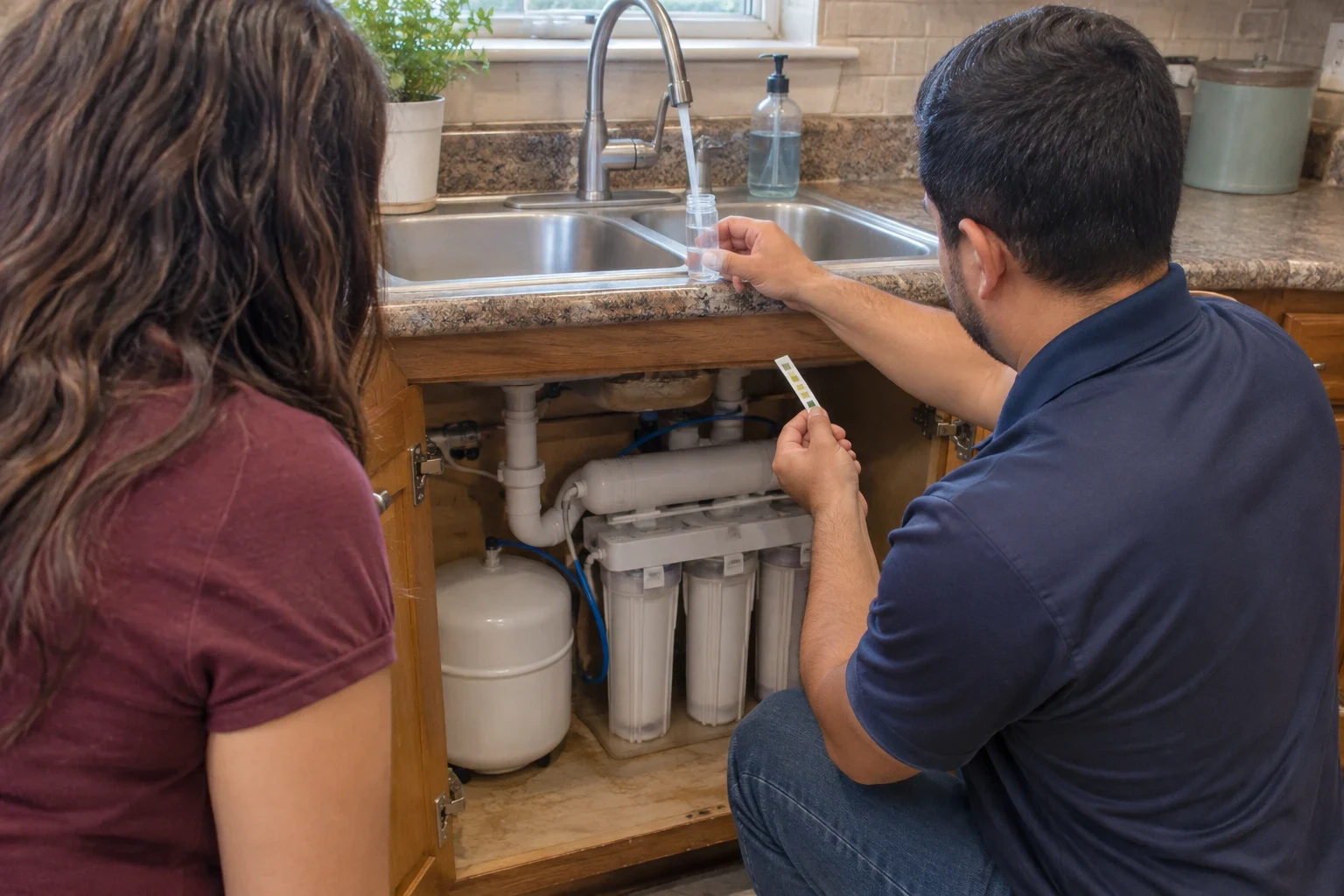
Every well has its own personality. In some homes, iron leaves rusty streaks inside the toilet tank. In others, hydrogen sulfide brings a sharp rotten egg odor. And some wells look clean on minerals yet turn up bacteria after a stretch of hard rain. Which of these you have decides the equipment, so testing comes before any recommendation.
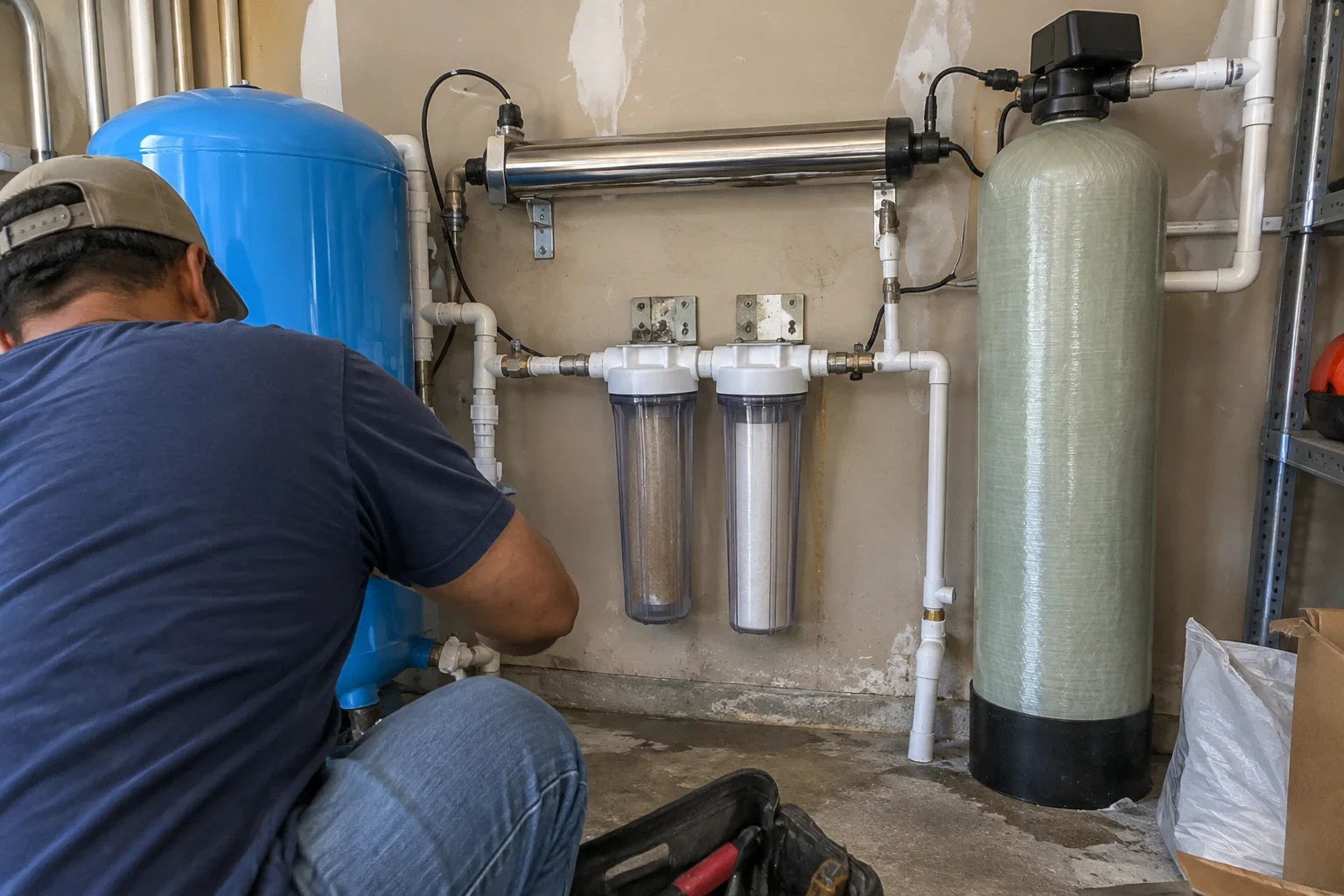
With the results in hand, we lay out the system in the sequence the water needs: grit removed up front, then iron, manganese or sulfur, then disinfection when bacteria shows up. Our systems are NSF Certified, and installation is free.
Your schedule matters to us too. Before we come, you'll know how long testing runs, the window we plan to arrive in, and about how many hours the water will be shut off when we install.
What Our Well Water Service Covers
- 01
A thorough well test
We look at iron, manganese, hardness, pH, sulfur and bacteria. For a broader lab panel, our water testing service goes further.
- 02
Sediment prefiltration
A spin-down screen or cartridge stops sand and silt at the front of the line. Keeping grit out means valves and media last longer.
- 03
Iron, manganese and sulfur removal
Oxidizing filters, often paired with air injection, change dissolved iron and sulfur into solid particles the media can hold. These filters rinse themselves clean, so they need a drain close by, which we sort out during the visit.
- 04
UV disinfection for bacteria
Water passes a UV lamp on its way into your home, and nothing chemical is added. The unit plugs into an outlet and needs a new lamp each year. We walk you through it before we pack up.
- 05
Acidic water correction
Water with low pH slowly wears at copper lines and leaves blue-green marks. A calcite neutralizer raises it back toward neutral.
- 06
Full services after the sale
Filter changes, lamp replacements, media checks and plain questions all stay with us. If something seems wrong down the road, you reach the same crew that did the install.
Questions about Well Water Treatment?
Call(713) 575-2946Signs Your Well Water Needs Treatment
Rusty marks on fixtures
Reddish-brown rings around drains and inside the toilet bowl usually mean iron. Whites can also come out of the wash looking dull, no matter the detergent.
A sulfur odor
That rotten egg smell comes from hydrogen sulfide and often gets stronger when the hot tap runs. Beyond being unpleasant, it can dull fixtures as time goes on.
Dark specks or slimy buildup
Black residue in faucets or the toilet tank may point to manganese or iron bacteria growing in the system.
Murky or sandy water
Grit scratches faucet parts, plugs aerators and wears out appliances before their time.
Flooding reached your wellhead
Heavy Gulf Coast storms can push floodwater over a well cap. A bacteria test afterward shows whether the water is safe to drink again.
Blue-green marks on copper
This tint is often a sign that acidic water is quietly wearing away at your pipes.
How a Well Water Job Runs
- 1
You call us
Describe what you're noticing at the tap, from odd smells to stains. We set a test visit, give you an arrival window and let you know how long it should run.
- 2
Testing and straight talk
We collect samples and go over the results with you. You learn what needs treatment, what doesn't and the reasons, all before we bring up equipment.
- 3
A written plan and a date
Each component is listed along with its job. Then we choose an install day that suits you and give you an honest window for arrival and for the water shutoff.
- 4
Install day
The system usually goes beside the pressure tank, so every faucet and your water heater get treated water. We cover the floors, haul away old fittings, and flush and check everything before leaving. If a part runs late or the work takes longer than planned, you hear from us instead of waiting and wondering.
- 5
Checking back
Once the new equipment has had time to break in, we sample the water again to make sure it's working as planned. We also tell you when the first round of maintenance comes due.
What Moves the Price of Well Water Treatment
Two things set your price: what the test finds and how your home is plumbed. Plain grit takes a single stage, while a well carrying iron, sulfur and bacteria together needs several. Each piece of equipment appears on its own line of the estimate, so nothing hides inside a bundle.
- The number of issues found
- Each problem can call for its own stage. Iron alone means one filter, and bacteria on top of that brings in a UV unit.
- Your household's daily demand
- A family with several showers going in the morning draws water faster than a couple in a two-bath house. We size the equipment to that peak flow, so pressure holds up when the washer and a shower run at the same time.
- Drain, power and space
- A backwashing filter has to reach a drain, and a UV unit has to reach an outlet. When neither sits close to the pressure tank, a bit of extra plumbing or wiring gets added.
- Replacement parts over time
- Lamps, cartridges and media all wear out on a known schedule. We go over those costs before you decide, so next year's upkeep holds no surprises.
Well Water Treatment Questions
Why test first instead of just installing a filter?
Iron, sulfur and bacteria can look and smell alike at the tap, and guessing often means buying the wrong equipment. The results show us exactly what needs treating. You pay for what your water calls for and nothing extra.
How many hours will I be without water on install day?
Usually part of the day, not all of it. We give you our estimate when we set the date. If something on site changes that, such as an old fitting that needs replacing, we tell you right away.
Can you get rid of the rotten egg smell?
Most of the time, yes. An oxidizing filter turns the sulfur into a form the media can hold back. When the odor only shows up with hot water, we also check the water heater, since it can play a part.
Would a water softener handle my well by itself?
A softener handles hardness and light iron, but it does nothing for bacteria or heavy sulfur. If hardness shows up on your test, we may add a softener as one stage among others. Our water softeners page has the details.
Can I add filtered drinking water later?
Yes. Many well owners add an under-sink reverse osmosis system in the kitchen once the whole house is treated. Our reverse osmosis page explains how the two work together.
What kind of upkeep does the system need?
A UV lamp is generally replaced once a year, and prefilters may need changing more often if your well carries a lot of sediment. Our full services after the sale cover that upkeep, and we put those visits on your calendar well ahead of time so they fit around your week.
Find Out What Is in Your Well
Start with a test and a straight answer. We will set a time that suits your week and keep you posted if anything shifts.